

Beet Curly Top Virus
By Jeff Pieper
Have you been having troubles growing vegetables this year? Well, you are not alone. The summer of 2026 has been difficult for vegetable growers. Of course, the drought has created issues, so too have the seemingly nonstop winds, and grueling heat. However, an often-unseen insect has also been wreaking havoc. The beet leafhopper, a small hemipteran that uses its piercing sucking mouthparts to feed on sap of many annual plants has had a banner year. If you are a vegetable grower, that is not good news.
The beet leafhopper is a vector for Curly Top Virus (CTV). As it pierces and sucks sap, it can also transmit CTV which can infect many annual crops, including beets, pumpkins, squash, peppers, tomatoes, and dry beans. In years such as 2026, large beet leafhopper populations infested with curly top virus can infect up to 100 % of plants. However, in most years, you can expect around 10 % virus infection rate. Once plants are infected with the virus there is no cure, all infected plants should be removed and disposed of.
Symptoms of Curly Top Virus vary by host; however, symptoms should occur throughout the entire plant. Most plants will be severely stunted, with yellow foliage. Distorted growth patterns, poor fruit set, purpling of veins (especially in tomato), and diminutive or shriveled fruit are also common. Infected plants will often die within a few weeks after infection.
Beet leafhopper are small wedge shaped insects of various colors including yellow, brown, light green, and grey. Beet leafhoppers have three morphologies, summer, migratory and overwintering. Beet leafhoppers can overwinter in western Colorado, however, most arrive from the Southwest, transported by wind. As they make their journey, they feed on many different annual weeds including kochia, and mustards. These weeds are also virus hosts and feeding on them transfers the virus to the leafhoppers. In Grand Junction we are most concerned with the summer morph which is light green in color. They are difficult to see as the “hop” away when you get close or brush against the plant, but can be easily caught using a sweep net.
You may be asking how to prevent the beet leafhopper and the curly top virus. Seven Integrated Pest Management (IPM) strategies can help prevent the beet leafhopper and curly top virus.
- Select resistant varieties: No varieties are fully immune to CTV; however, some are more resistant than others. When selecting seed for your vegetable garden look for varieties that list CTV resistance.
- Monitoring: Beet leafhopper infestations vary greatly year to year. Use yellow sticky traps to determine beet leafhopper presence prior to planting and through July.
- Planting date: Plant earlier or later in the season. Beet leafhoppers are most active on annuals between mid-May and July. Planting earlier or later in the season can greatly reduce beet leafhopper predation and virus infection rates on your plants.
- Trap crop: Use a trap crop to lure beet leafhoppers away from more desirable crops. Sugar beets are the preferred host. Seed sugar beets 8 to 12 feet away from desirable crops early in the season and monitor them closely.
- Exclusion: Use floating row cover over plants early in the season. The row cover will exclude beet leafhopper from the plants lowering the possibility of virus infection. For plants with pollination needs, remove the row cover at flowering.
- Disruption: Reflective mulches have been shown to be effective at deterring insects, especially early in the season. However, once the plant canopy closes over the mulch it is no longer effective.
- Insecticides: Utah State University has a list of insecticides approved for home use. Read and follow all label rates and application instructions before applying.
Learn about Curly Top Virus and other tomato problems at these resources:
- Recognizing Common Tomato Pests, Pathogens, and Problems (CSU Extension)
- Curly Top of Tomato (USU Extension)
Jeff Pieper is the Commercial Horticulture & Natural Resources Specialist for CSU Tri-River Area Extension.
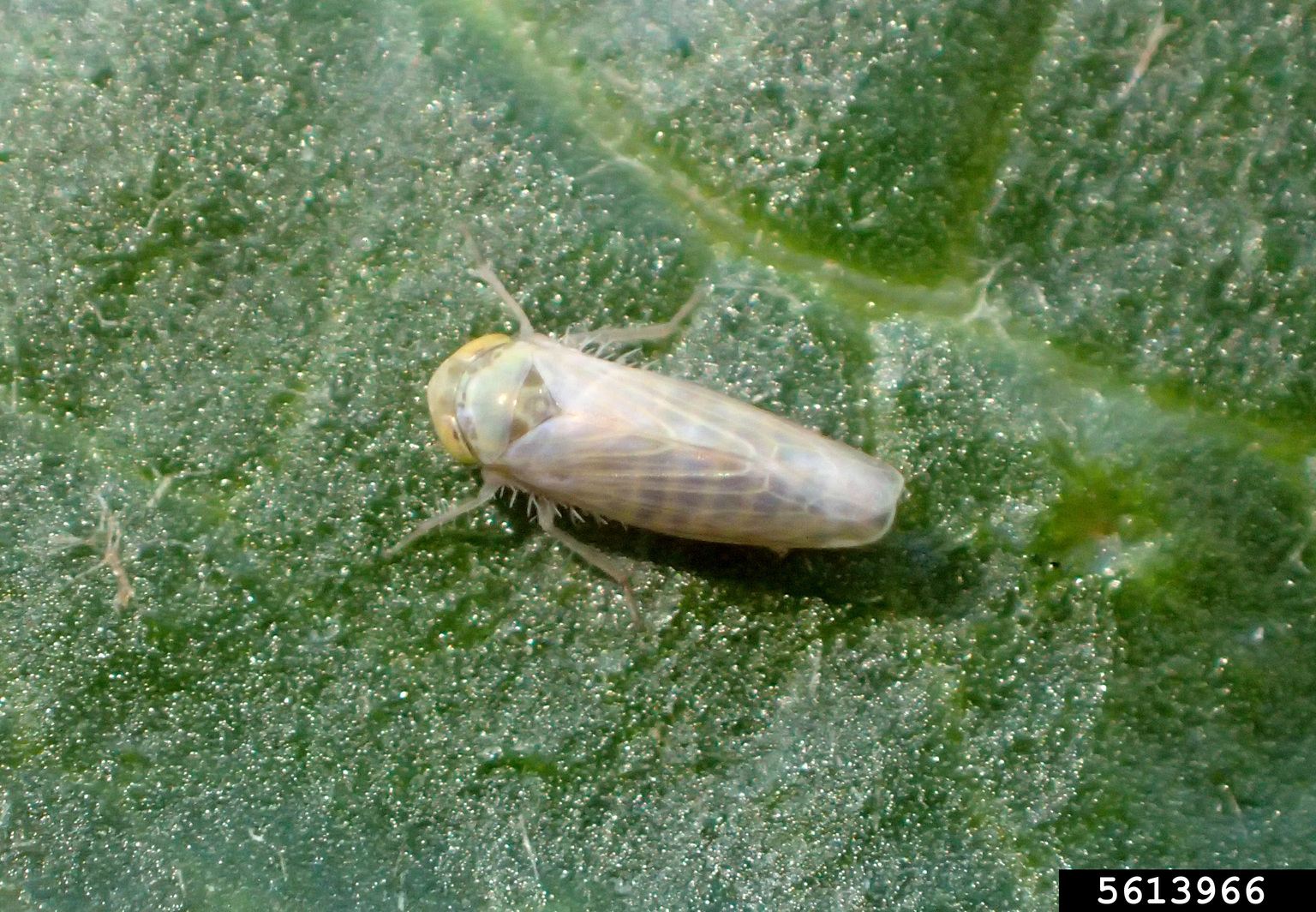
Adult beet leafhopper (Neoaliturus tenellus (Baker, 1896) (Whitney Cranshaw, Colorado State University, Bugwood.org)
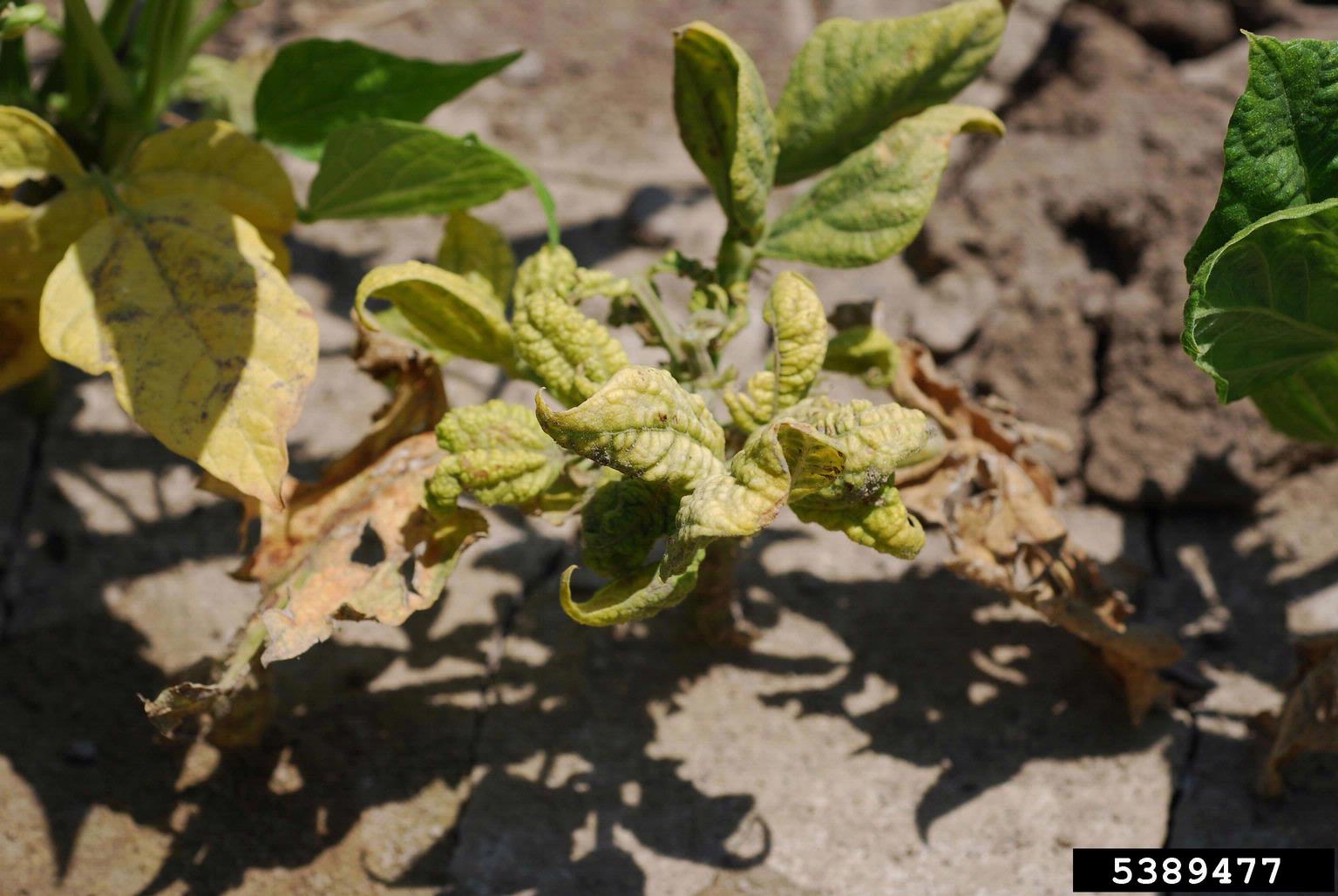
Curly top in dry bean (Howard F. Schwartz, Colorado State University, Bugwood.org)
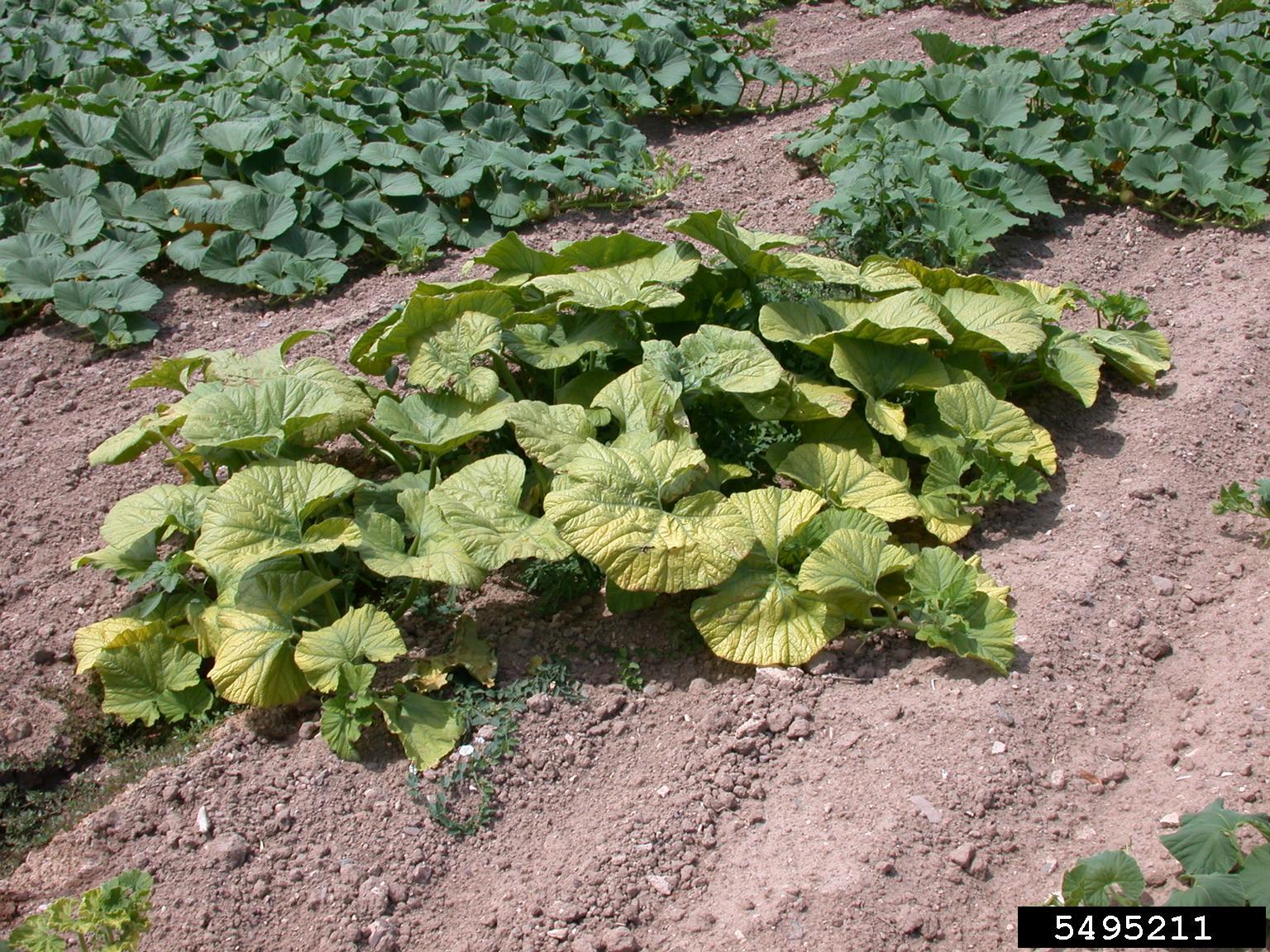
Curly top in winter squash (Bob Hammon, Colorado State University, Bugwood.org)