

Fall Planting: Garlic in Western Colorado
Courtesy of Casey Foor, Colorado Master Gardener
Fall in Western Colorado may feel like it’s the start of a slower season for your garden, but for garlic gardeners, it’s just the beginning of a bountiful harvest. While summer crops are finishing up, planting garlic in autumn gives the cloves enough time to send out roots before winter’s deep cold sets in. Garlic is one of the easiest edibles to grow, but success depends on timing, variety choice, and proper care.
Colorado State University Extension recommends planting garlic before October 15th in many Colorado locations so the cloves have enough time to establish roots before the ground freezes. Tri River Area Extension
If you’re selecting garlic for your Western Colorado garden, you’ll want to think about hardneck vs. softneck types. Hardneck garlic (subspecies ophioscorodon) tends to be more cold-hardy, produces fewer but larger cloves, and gives you those flavorful stalks—or scapes—in early summer. They tend to show off more vivid, complex flavors, especially in our cooler growing conditions. Softneck garlic (subspecies sativum) generally stores longer, has more cloves per bulb, and is often more forgiving of milder conditions. Both types can do well here if you give them the right prep, planting time, and winter protection.
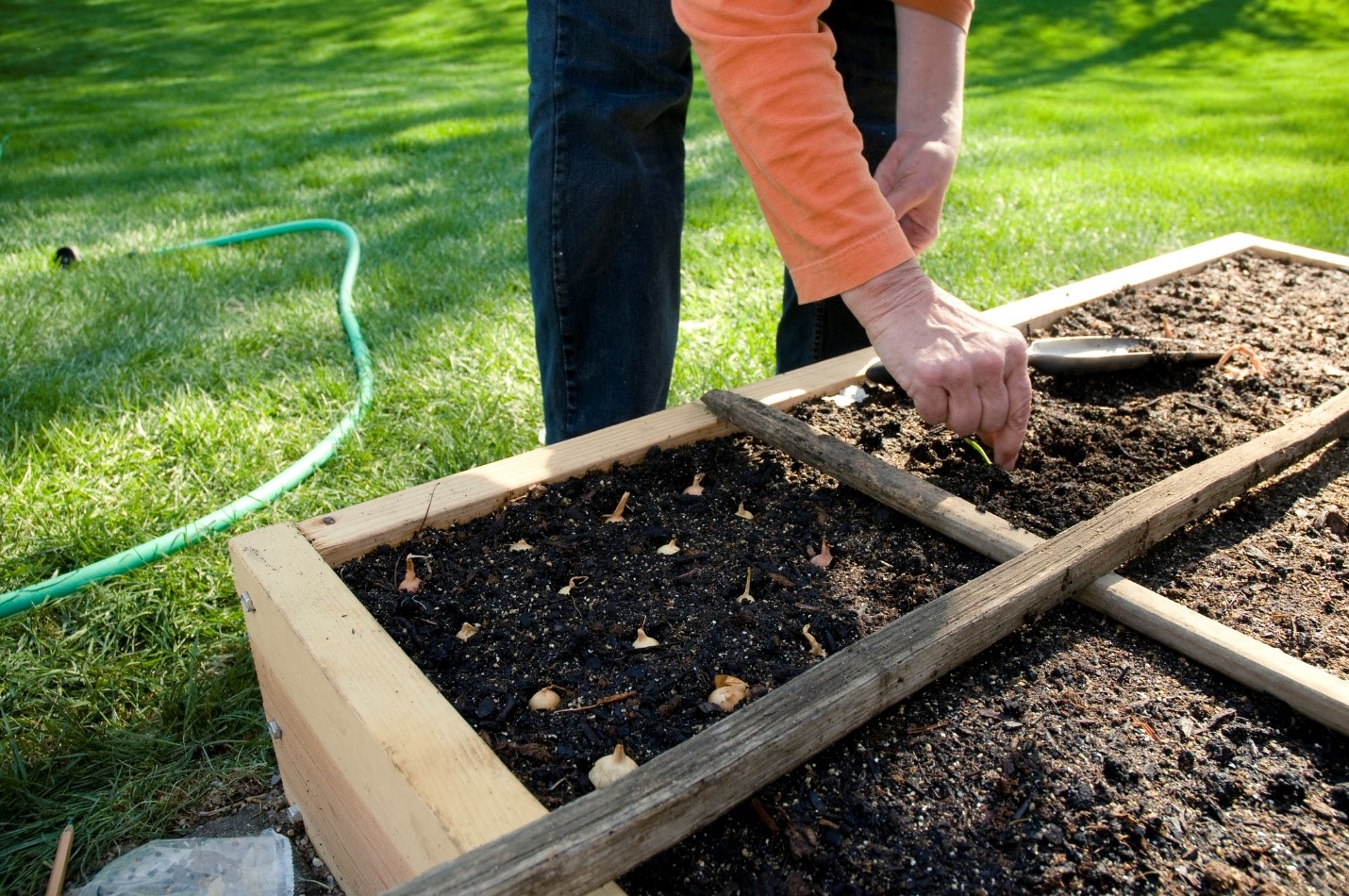
Planting garlic in a raised garden bed (Image: Jen and Joe, flickr.com)
When & How to Plant
Late September into October is usually the sweet spot for garlic planting in Western Colorado. Planting too early risks the cloves sprouting before the cold sets in; too late and they may not establish enough root system to survive.
To plant your bulbs: prep a bed with well-drained soil rich in organic matter—think compost or aged manure—and ensure good sun exposure. Break your bulbs into individual cloves just before planting, keeping their papery skin intact. Plant them pointed end up, about 2 inches deep, spaced roughly 6 inches apart, with rows about 12 inches apart. Once planted, cover the bed with 3-4 inches of mulch (straw, leaves, etc.) to insulate the soil and protect the cloves from temperature fluctuations.
Over winter, garlic will mostly sit dormant under the mulch. In early spring, when you see shoots pushing through, carefully remove or thin the mulch if temperatures rise so the soil warms and dries somewhat. Keep the beds weed-free, since weeds compete for nutrients and water that garlic heavily depends on. In hardneck garlic, you’ll see scapes (flower stalks) emerge; cutting off scapes helps direct energy into bulb development. When about half of the leaves turn brown, but before too many have died off, it’s time to harvest. Cure your garlic bulbs in a dry, shaded, well-ventilated place so they store well through the off‐season.
Garlic Not For You? Other Edible Crops to Plant In Fall
Garlic isn’t the only edible you can get started with right now. Other edible or helpful crop options for your fall garden include:
- Onions & Shallots
- Cold-hardy greens
- Lettuce & salad mixes
- Cover Crops & Green Manure options:
- Austrian Winter Peas
- Hairy Vetch
- Winter Wheat
- Barley
- Daikon (Tillage) Radish
With the right timing and care, garlic can reward gardeners with robust bulbs and a reliable harvest. A little effort in the fall ensures flavorful returns the following summer, and there are still options for edible gardening this fall!
References
- Colorado State University Extension. Year Round Gardening: It’s Time to Plant Garlic Tri River Area Extension
- Washington State University Extension. Growing Garlic in Home Gardens (Fact Sheet FS162E). WSU Web Services
- University of Maryland Extension. Growing Garlic in a Home Garden. University of Maryland Extension
- Oregon State University, College of Agricultural Sciences. Garlic | Horticulture horticulture.oregonstate.edu
One Response on “Fall Planting: Garlic in Western Colorado”